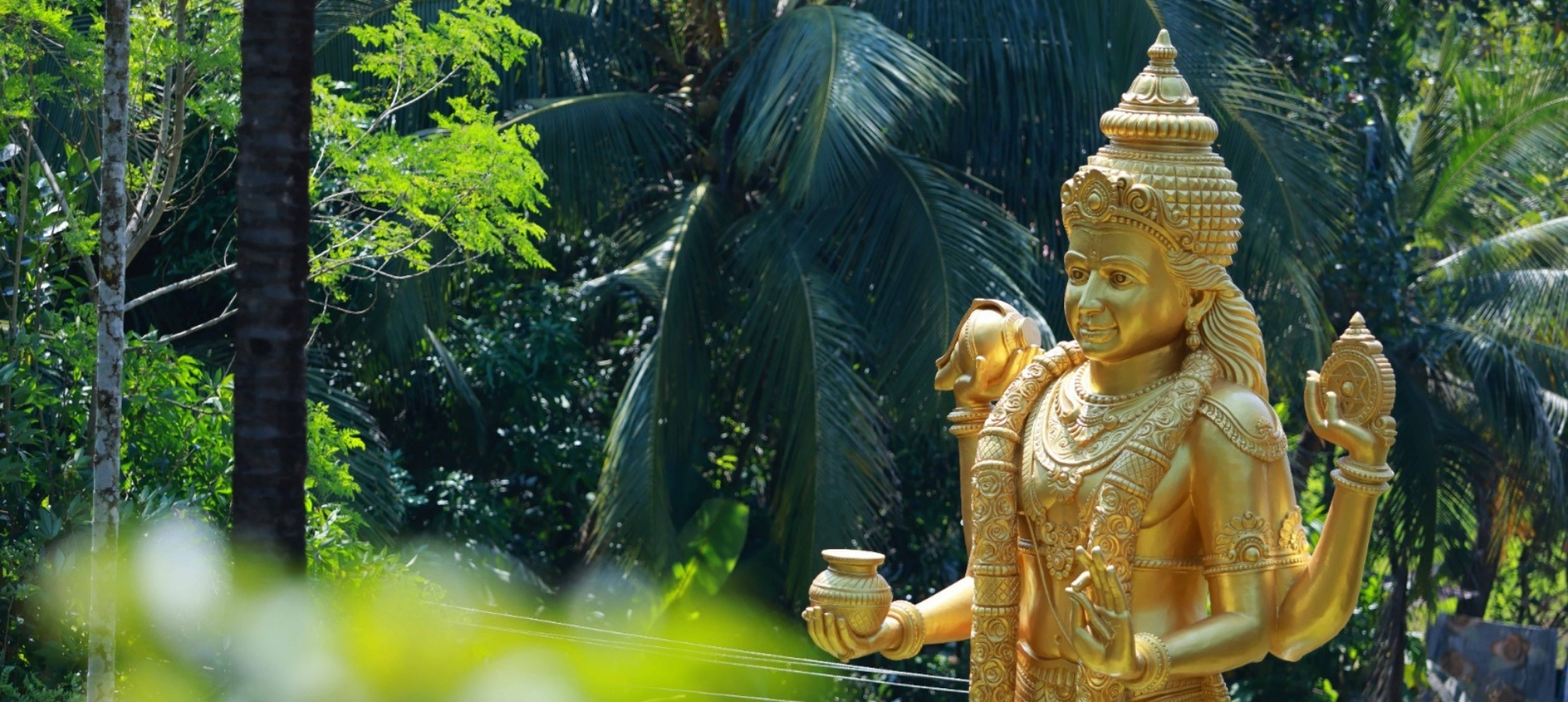
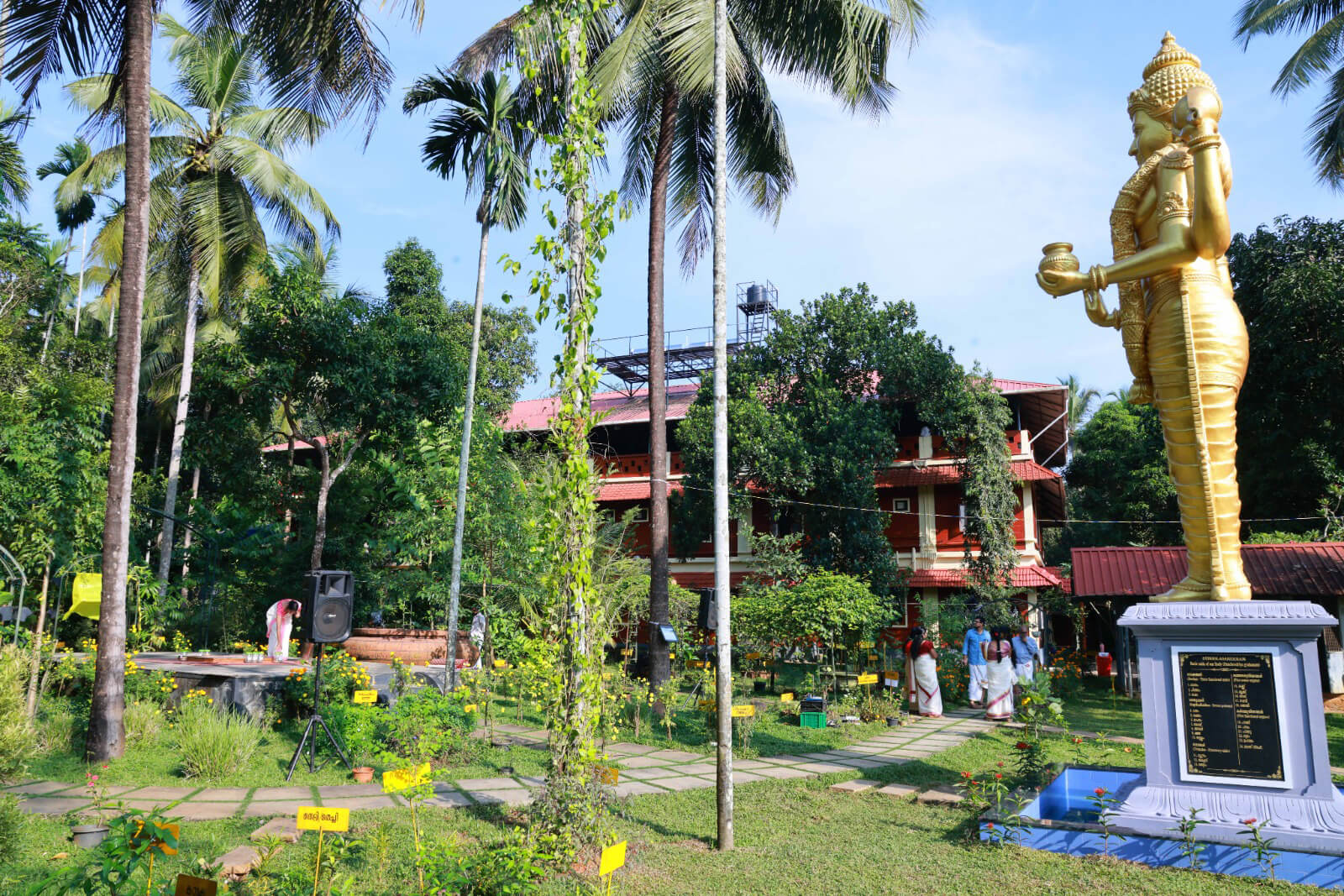
The Dhanwanthari statue, Ayurbharath and Thodiyile Chedi — sacred and botanical landmarks within our campus.
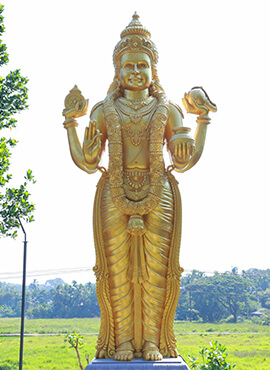
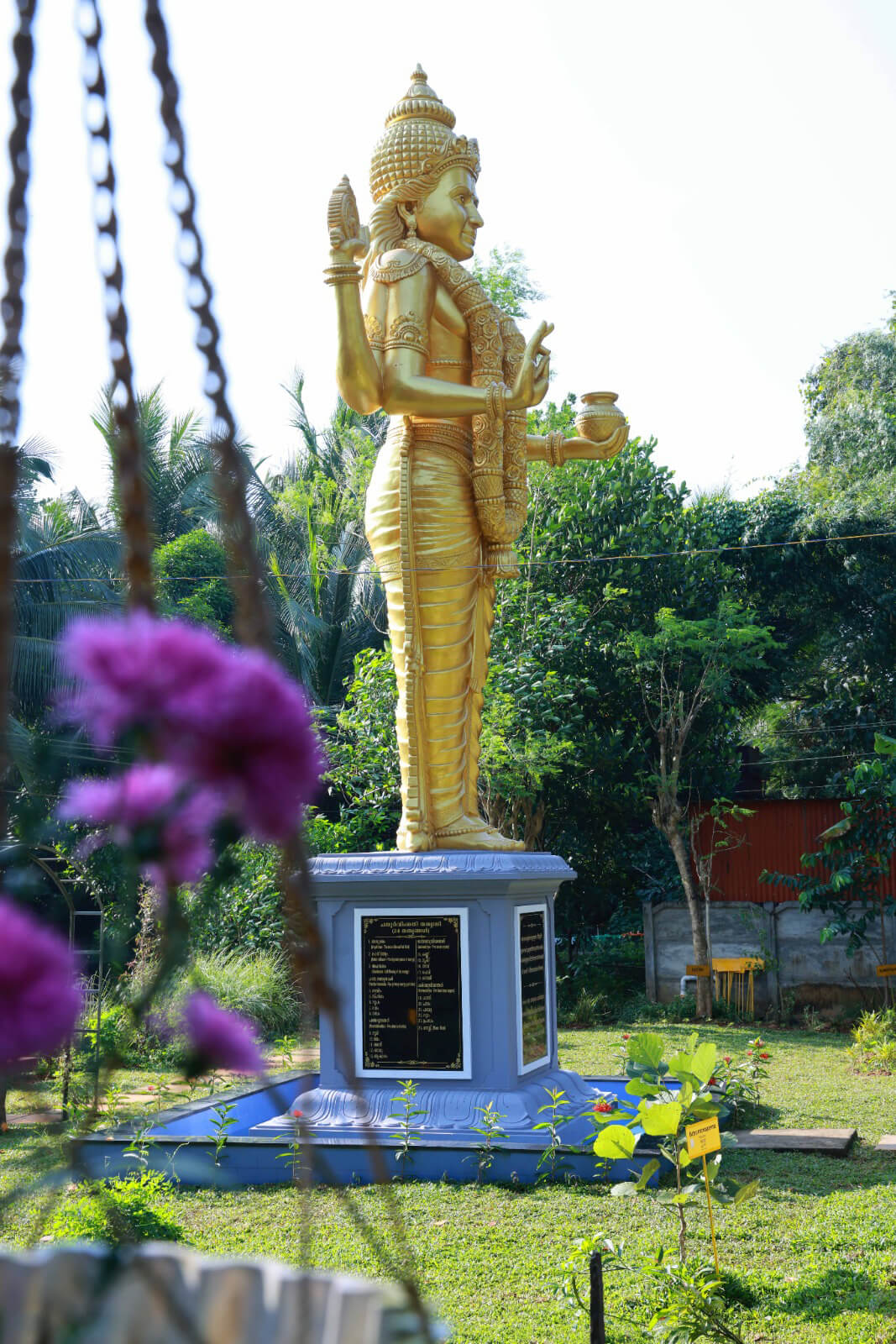
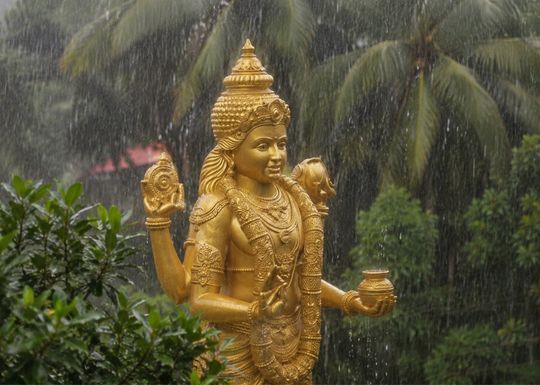
According to the Bhagavata Purana and Ramayana Dhanwanthari appear with a pot of Amrita (elixir) of Immortality during the churning of the ocean. The Devas and asuras churned ocean (palazhi) using the serpent Vasuki as a rope and Mount Mandara as a pole. Dhanwanthari is considered to be the originator of Ayurveda and he is considered as an avatar (incarnation) of Lord Vishnu. He is said to have spread the teachings of Ayurveda to the humans and considered as God of Ayurveda.
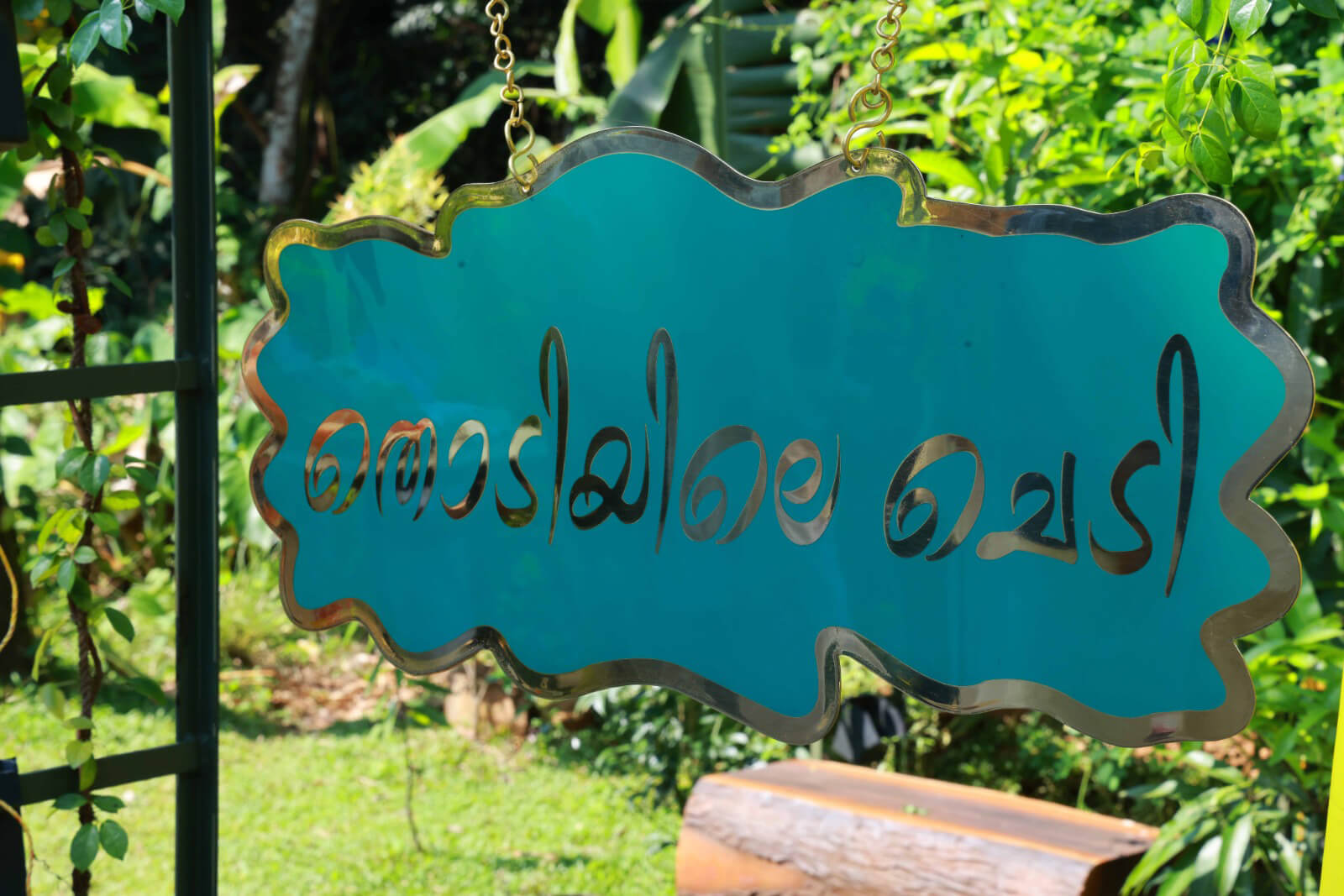
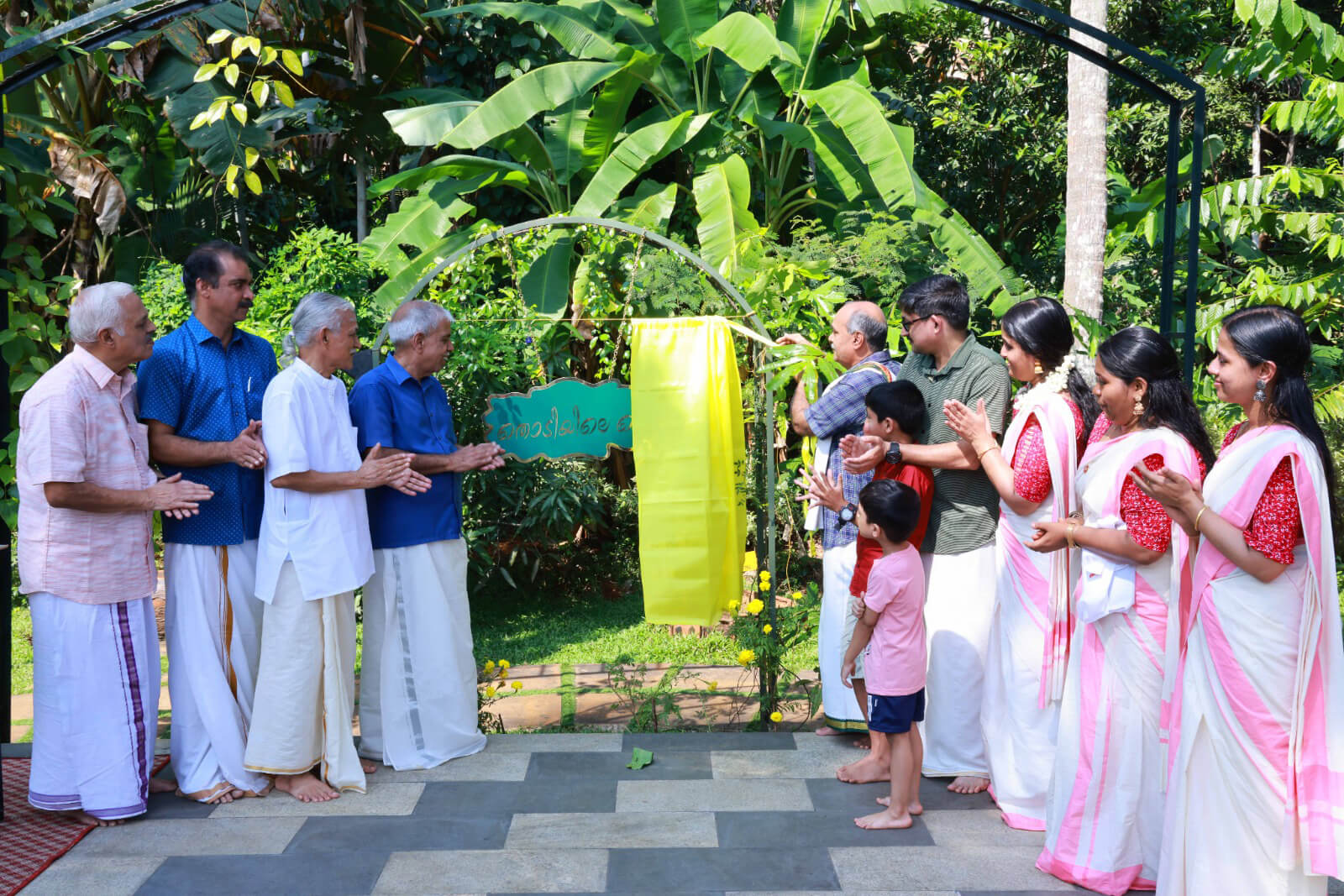
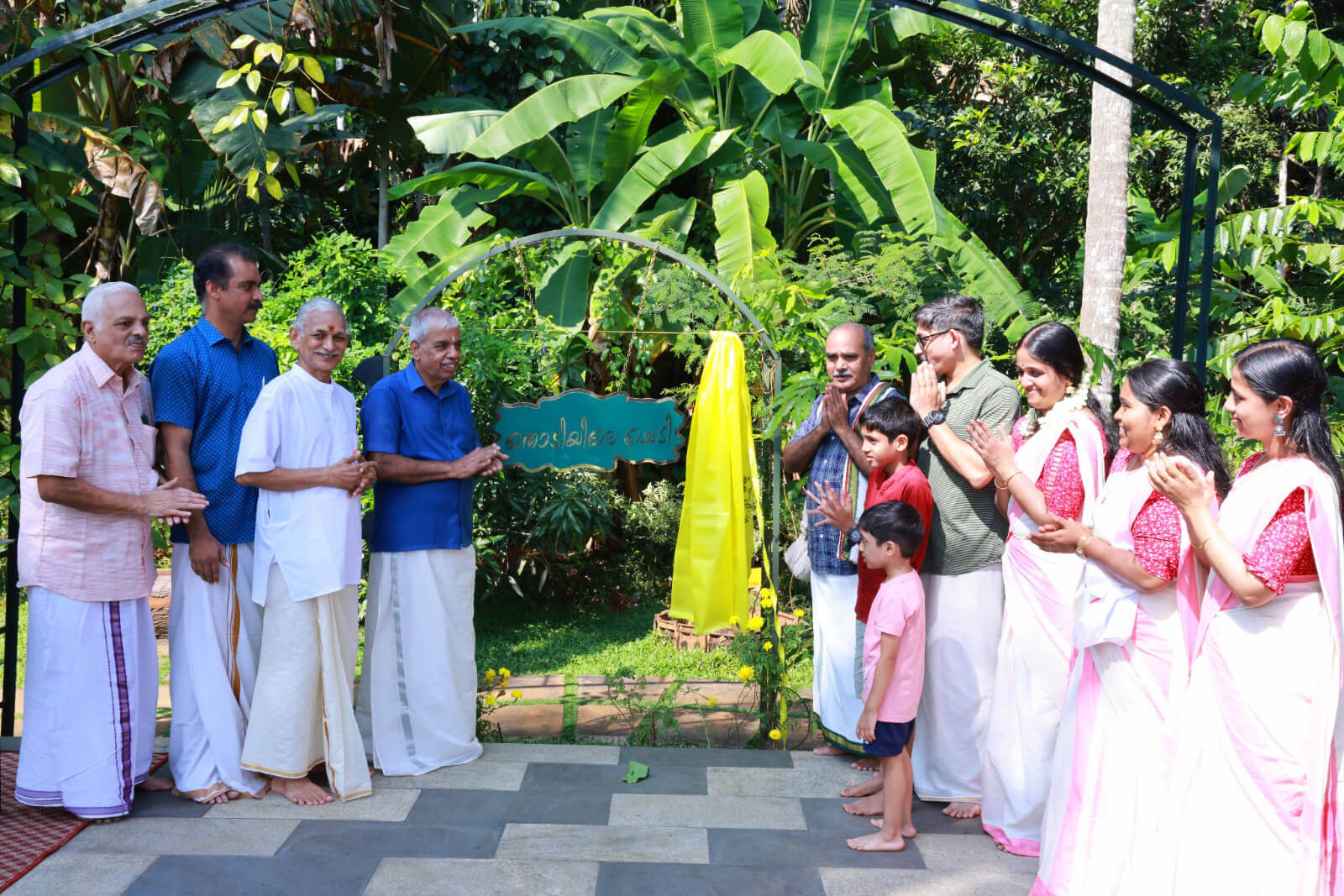
In an area of one acre we have a beautiful herbal garden which contains rare drugs like Somalatha, Sami and also Nakshatra vana and Rasi vana. The medicinal significance of plants and climbers growing in gardens has been brought to the attention of the general public through a program called ‘Thodiyile Chedi,' initiated by Dhanwanthari Ayurveda Bhavan in collaboration with CCTV, Kunnamkulam. This comprehensive program was led by our esteemed Guru, Dr.C.M.Sreekrishnan. Featuring over 365 medicinal plants, this wonderful program has significantly contributed to enhancing health awareness within the community. As a tribute to the program's remarkable success, this enchanting garden has proudly been designated as ”Thodiyile Chedi”.
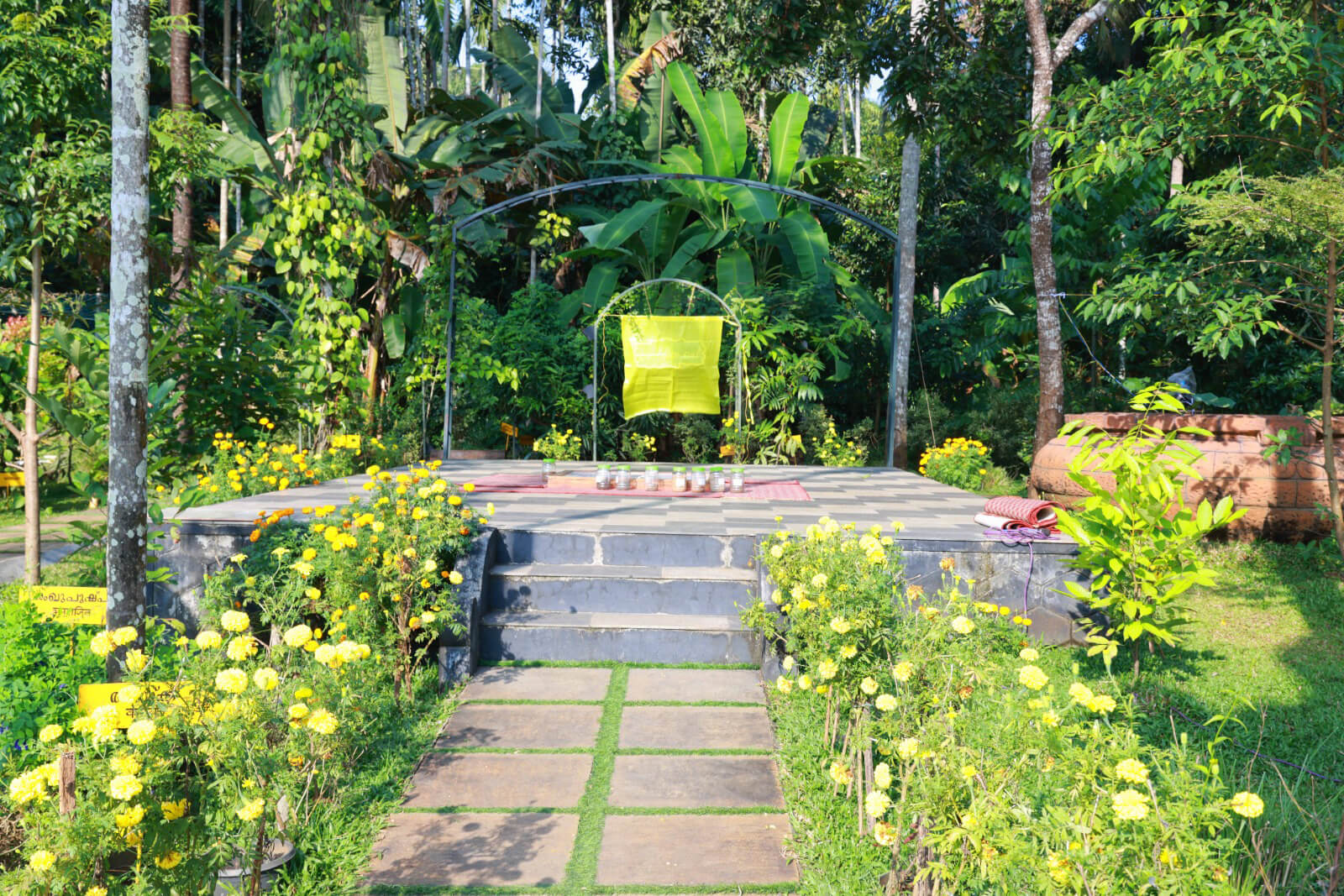
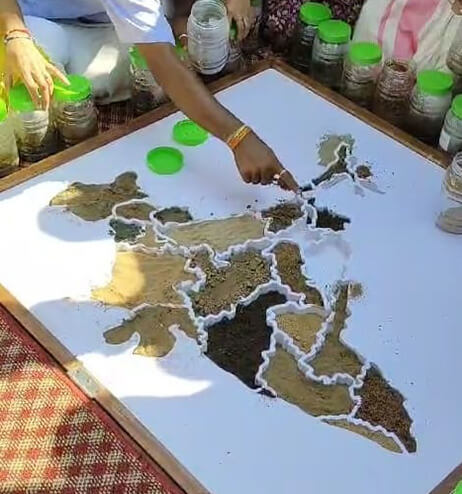
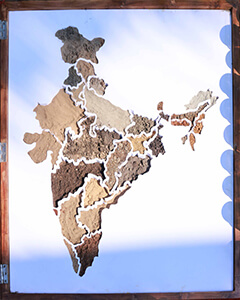
In our garden to show the unity in diversity through Ayurveda, a map of India was prepared by Ayurveda doctors all over India with the soil collected from respective states on November 10 th 2024.
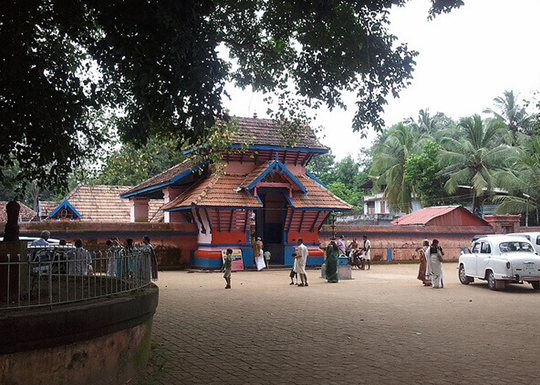
Nelluvai is a typical remote village in Kerala. There are several temples in and around Nelluvai — temple festivals here bring elephant processions, classical group drumming and a wide variety of fireworks. Snake-worshipping festivals are also common in the premises, normally celebrated during January, February and March each year.
Guruvayur, the temple of Sreekrishna and one of Kerala's most famous pilgrim centres, is only 20 kilometres away — its elephant park is home to more than 60 tamed elephants. Thrissur, the district headquarters and cultural capital of Kerala, is just 30 kilometres from Nelluvai; during April & May, Thrissur vibrates with temple festivals, most notably the Thrissur Pooram, which draws millions of visitors with about a hundred decorated elephants.
Kerala Kalamandalam, Cheruthuruthy — the famous school of classical arts taught in the ancient Gurukulam system — is about 25 kilometres from our centre, and a centre of attraction for many western visitors.
The weather in Kerala in general is tropical. Heavy rains fall during June–July; August–September brings moderate rain but is normally bright. November, December and January are cool, though November sees night showers for 10–15 days. February is pleasant, and by its end summer begins — March, April and May are quite hot. Kerala being coastal, humidity is high, but Nelluvai enjoys a better condition as it is not very close to the sea.
| Period | Temperature |
|---|---|
| June – October | 22°C – 27°C |
| November – January | 18°C – 30°C |
| February – May | 22°C – 35°C |